
Voyager mieux
Aménagement & Plans — premier plan : lit peigne 120 × 190 (volumes, 12 V, eau).

Guides pratiques pour préparer, organiser et simplifier chaque départ en van ou camping-car.

Checklists essentielles, de l’eau aux outils, pour voyager sereinement sans s’encombrer.

Conseils d’aménagement minimaliste et bonnes pratiques pour profiter respectueusement des lieux.
Vanlife libre
Des idées simples pour aménager, voyager et bivouaquer avec respect, confort et autonomie.


Dossier solaire
Panneaux solaires : produire chez soi, sans se raconter d’histoires
26 septembre 2026. Chiffres datés et sourcés. Ils ne remplacent pas un devis.
Au 31 mars 2026, le parc photovoltaïque français atteint 33,0 GW (SDES). En 2025, il a produit 37,0 TWh, soit 7,3 % de la consommation électrique hors autoconsommation.
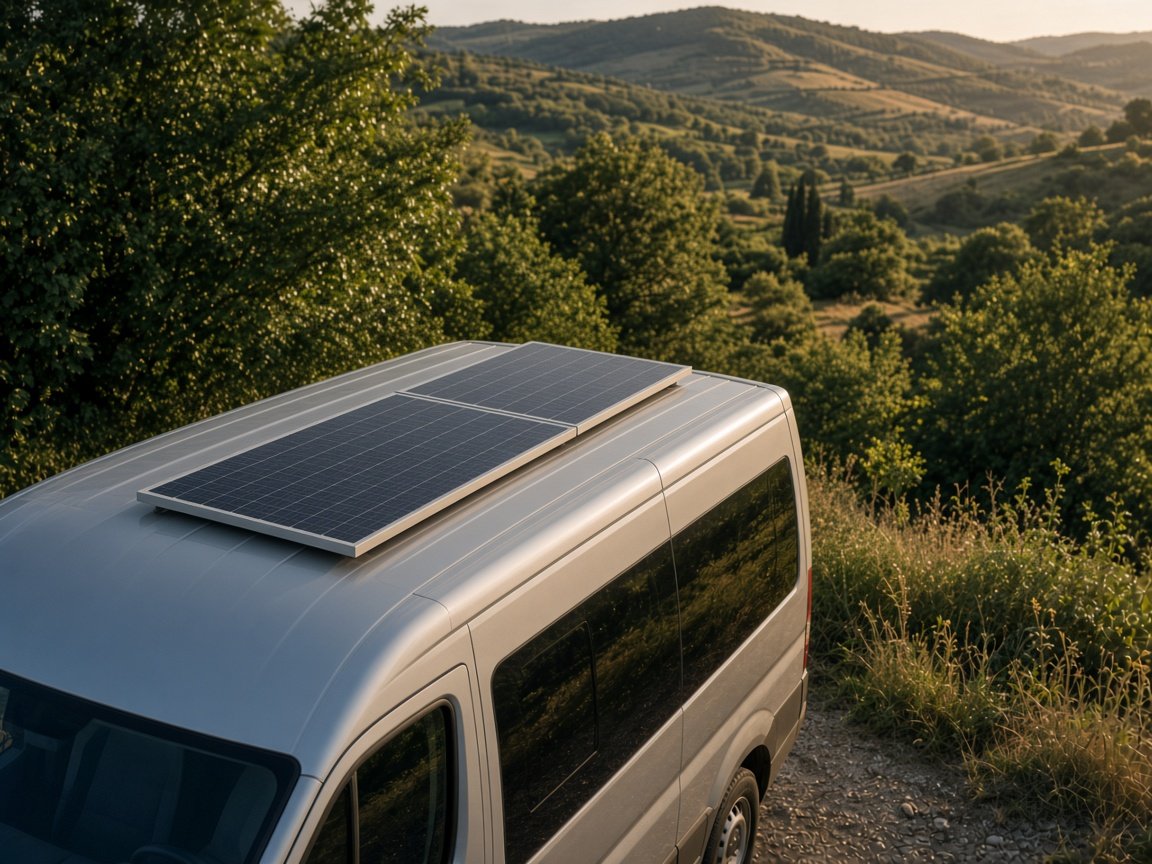
Depuis le 5 juin 2026 (arrêté du 1er juin), la prime à l’autoconsommation n’existe plus pour les nouveaux dossiers concernés, et le surplus injecté est racheté autour de 1,1 c€/kWh HT. L’intérêt, s’il existe, se joue sur l’électricité que l’on n’achète plus au réseau — y compris sur un van, où le solaire allonge l’autonomie seulement si la conso a déjà été taillée.
Sources : SDES, tableau de bord solaire T4 2025 et parc au 31 mars 2026. Arrêté tarifaire du 1er juin 2026, JO du 4 juin 2026. RTE, analyses production solaire.